
Applications of Manual Handling Robots
Manual handling robots from Modular iO address diverse production challenges. Our systems are designed to take on physically demanding and repetitive tasks, allowing your staff to focus on higher-value activities. Typical applications include:
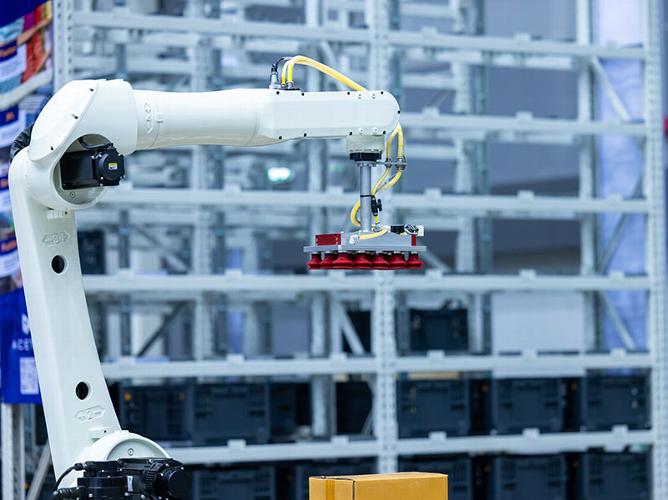
Palletising and depalletising
Boxing operations
Product stacking
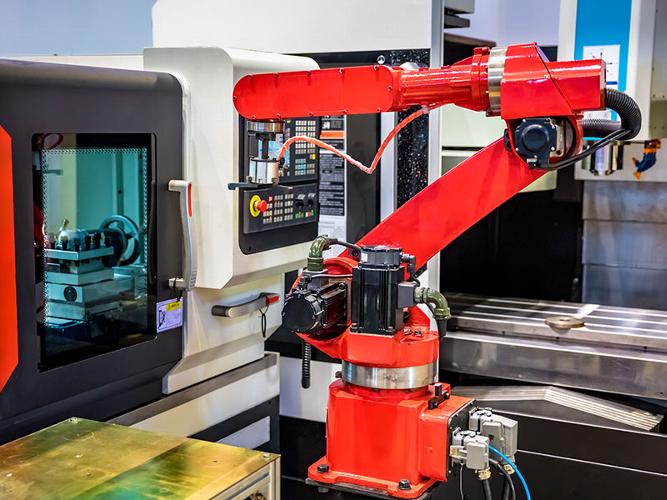
Machine loading and unloading
Heavy lifting
Hazardous material handling
These flexible robotic solutions help reduce workplace injuries while improving efficiency.
Consistency & Quality
Robotic material handling systems guarantee reliable, repeatable movement, ensuring your production line operates with precision. The result is:
- Reduced product damage
- Consistent pallet patterns
- Reliable packaging quality
- Peak performance even during high-volume demand
Flexible Production Lines with Modular iO
Our flexible modular systems deal with changing product sizes, packaging types, and different pallet configurations with ease. With Modular iO, you can:
- Reconfigure robot setups quickly as your business grows
- Add new modules for extra tasks or capacity
- Keep production lines agile for a rapidly evolving market
- Enjoy scalable automation, perfectly tailored to your needs

Cobot Return on Investment (ROI)
Investing in modular material handling robots offers strong ROI for manufacturers in Bristol and throughout the UK. Key benefits include:
- Reduced labour costs through automation of repetitive tasks
- Fewer workplace accidents and lower absenteeism
- Increased throughput and faster workflow
- Improved staff utilisation, redeploying team members to more valuable work
- Long-term operational savings from better efficiency
- Fast adaptation to new tasks or products, limiting downtime
These factors combine to deliver competitive advantage and measurable financial gains, making cobots a smart choice for ambitious businesses.
Modular Cobot Solutions
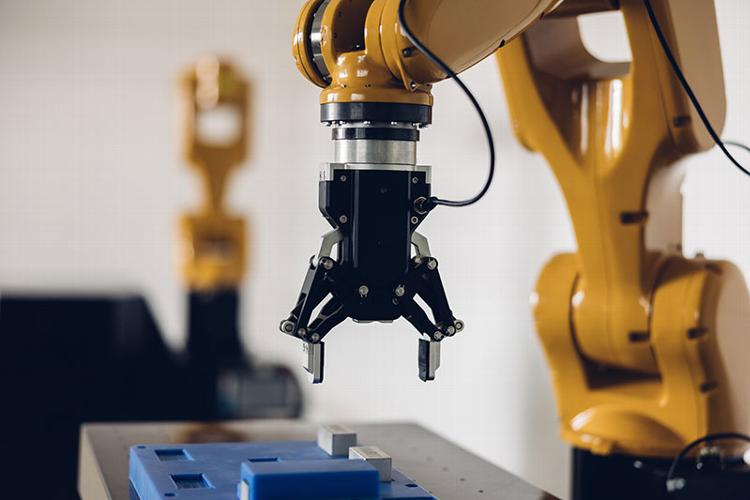
With Modular iO's modular approach, you can automate manual handling with cobots for a wide variety of tasks. Add modules or upgrade capacity as your production demands shift, keeping your business ahead of the curve.

Key Advantages of Automation Using Cobots
Adopting robot loading systems and autonomous material handling brings transformative benefits over traditional manual handling. Here's why more UK manufacturers are investing in palletising robots and loading and unloading robots:
- Reduced manual handling risks: Eliminate the most common causes of musculoskeletal injuries for your staff.
- Improved safety: Cobots operate within safe, clearly defined perimeters, protecting workers and reducing accidents.
- Increased efficiency: Maintain high speed and consistency, whether you're operating a single shift or a 24/7 production line.
- Consistent performance: Robots don't tire or lose focus, delivering reliable results every time.
- Flexible deployment: Modular iO cobots are movable and easily reconfigured to handle new tasks as your needs change.
- Strong ROI potential: Lower costs, higher productivity, and rapid payback, plus the ability to control your own automation with our training packages.
- Futureproofing: Cobot systems grow as you grow. Add modules for extra capacity or change functionality as your market evolves.
Whatever the size or sector of your business, you can count on Modular iO for reliable robotic palletising systems for manufacturers and flexible warehouse automation.
Frequently Asked Questions
Want to know more about our Cobot Services?
Can robotic palletising reduce workplace injuries?
Yes, robotic palletising reduces manual lifting, minimising injury risk and ensuring safer work environments, especially in manufacturing and logistics.
What is a material handling robot?
A material handling robot automates moving, loading, unloading, or stacking products or materials, boosting efficiency and safety in various industries.
What tasks can material handling robots perform?
Material handling robots can palletise, depalletise, load or unload machines, stack products, box goods, perform heavy lifting, and handle hazardous materials.
What industries use material handling robots?
Industries such as logistics, warehousing, food manufacturing, pharmaceuticals, packaging, construction materials, and general manufacturing frequently use material handling robots.
What are the benefits of material handling robots?
Key benefits include reduced labour costs, improved productivity, fewer injuries, consistent quality, and strong return on investment for manufacturers and warehouses.
Can material handling robots reduce manual lifting?
Absolutely, these robots automate heavy or repetitive lifting tasks, reducing strain on workers and helping employers comply with health and safety guidelines.
What is the difference between a material handling robot and a palletising robot?
A palletising robot is a type of material handling robot specifically for stacking goods onto pallets, while material handling robots cover a wider range of tasks.
Can material handling robots work alongside employees?
Yes, collaborative robots (cobots) are designed to work safely near employees, complementing human roles without replacing vital teamwork.
Can material handling robots be integrated into existing operations?
Modular iO’s solutions are fully flexible and designed to integrate into current production lines or warehouse systems without major disruption.
How do material handling robots improve workplace safety?
They automate high-risk manual tasks, lower injury rates, and ensure safer handling of heavy or hazardous materials across manufacturing and logistics operations.
Is training needed to operate material handling robots?
Minimal training is required. Modular iO provides full instruction and ongoing support so your staff can operate and reprogram cobots safely and efficiently.
How do material handling robots impact productivity?
These robots maintain consistent speed and accuracy, reduce downtime, and enable staff to focus on complex tasks, enhancing overall productivity.
